

Mercedes-Benz Buses in South Africa: Market Overview
Mercedes-Benz Buses play a pivotal role in South Africa’s urban and intercity transport, combining a long-standing reputation for reliability with a comprehensive support network. The market overview shows demand driven by rapid urbanization, government-led transit upgrades, and private operators expanding fleets with modern low-floor city buses and efficient coaches. Local assembly and a robust service network underpin competitive total cost of ownership, while a focus on safety, emissions-compliant models, and spare-part availability helps Mercedes-Benz stay prominent in both metropolitan fleets and long-haul operations across the country.
Brand presence and regional leadership
Mercedes-Benz Buses in South Africa represent a cornerstone of urban and intercity mobility, combining a long-standing brand heritage with a local footprint that supports operators across major cities and regional markets. The Mercedes-Benz bus portfolio in the country is aligned with demand for reliability, safety, and total cost of ownership, making MB a trusted choice for municipal fleets, private operators, and parastatals seeking durable and serviceable bus solutions.
Market-wise, South Africa’s bus sector is driven by urbanization, public transport reform, and tender-driven procurement. City networks in Gauteng, the Western Cape, and KwaZulu-Natal rely on modernized fleets to improve safety, accessibility, and efficiency, while intercity corridors connect regional centers. Operators increasingly demand modern low-entry and low-floor configurations, robust aftersales support, and remote diagnostics to maximize uptime. Mercedes-Benz Buses remains well-positioned to meet these needs through a comprehensive lineup and a mature local support ecosystem.
Brand presence in South Africa is anchored by a complete product range that includes city buses, intercity models, and coaches tailored to demanding African operating conditions. The Citaro family is widely deployed for urban transit, offering modular configurations to suit different route structures and passenger loads. For suburban and interurban services, Mercedes-Benz platforms such as the O500LE and OC500LE are favored for their efficiency, low-floor design, and adaptability to varying road conditions. A strong emphasis on local service, spare parts availability, and driver training reinforces MB’s reputation for reliability.
Regional leadership is demonstrated through MB’s extensive Southern Africa network, which spans across national borders to support neighboring markets and the broader SADC region. The combination of a well-distributed dealer footprint, rapid parts supply, and vehicle uptime programs helps MB maintain high fleet availability for public authorities and private operators alike. Mercedes-Benz also emphasizes fleet-management and telematics solutions that help operators optimize routes, monitor performance, and reduce total operating costs in the demanding Southern African context.
Electrification and modern propulsion are shaping the future of MB Buses in South Africa as they do globally. Mercedes-Benz is advancing its electric and hybrid options, including city bus platforms that can support electric drivetrains and associated charging infrastructure. In a market focused on reducing emissions and improving air quality, the company positions itself to participate in tender programs and pilot projects that explore sustainable urban transport while delivering the durability and uptime required by busy SA fleets.
In summary, Mercedes-Benz Buses in South Africa combine a strong brand presence with a robust regional leadership position, offering a trusted product lineup, a comprehensive aftersales network, and ongoing investments in technology and sustainability. This combination supports public and private operators as they modernize fleets, improve service levels, and pursue longer-term efficiency in the Southern African region.
Historical milestones and key partnerships
Mercedes-Benz Buses in South Africa have long been a cornerstone of the country’s public transport and coach tourism sectors, offering a wide range of urban, intercity and school transport solutions backed by a strong local service and parts network.
Market Overview: The South African bus market features a mix of municipal fleets, private operators, commuter services and long-distance coaches. Demand is driven by urbanization, renewal of aging fleets, and the need for reliable, fuel‑efficient and low‑emission vehicles. Mercedes-Benz South Africa (MBSA) leverages a broad product lineup and an extensive service footprint to support fleet operators, transport authorities and bodybuilders alike, while offering aftersales, parts supply and training to keep buses on the road in challenging operating environments.
Market Overview: Competition in the South African bus market includes global OEMs and regional players, with tenders and public‑private partnerships shaping much of the procurement. Operators increasingly look for buses that balance durability, ease of maintenance, spare‑parts availability and fuel efficiency, as well as support for telematics and planned maintenance programs. Mercedes-Benz’s reputation for build quality and a robust local network positions its buses as a preferred option for urban routes, tourist coaches and school transport.
Historical milestones: MBSA’s presence in South Africa stretches back decades, with growth tied to the expansion of urban and intercity mobility. The company has progressively introduced modern, low‑floor coaches and urban buses designed to handle South Africa’s varied road conditions, climate and operating cycles. Over time, MBSA has deepened local service and parts capabilities, aligned with regional transport needs, and integrated digital tools to support uptime and efficiency. The evolution of MBSA’s bus offering has paralleled broader shifts toward cleaner technologies and more capable fleet management in the region.
Historical milestones: The partnership landscape has evolved as MBSA engaged with municipal transport authorities, private operators and local bodybuilders to tailor vehicles for South Africa’s specific requirements. This included collaboration on maintenance programmes, driver and technician training, and aftermarket support that helps operators sustain high utilisation, minimize downtime, and extend fleet life.
Key partnerships: A core element of Mercedes-Benz Buses’ success in South Africa lies in its network of partnerships. Collaborations with municipal transport departments and state transit programs help align bus specifications with local routes and tender criteria. Partnerships with local bodybuilders and assembly partners enable customization for urban and intercity service, including adaptations for low-floor configurations and passenger flow management. In addition, MBSA maintains close links with regional training institutions, providing hands‑on technician and driver training to support efficient, safe operations. Finally, the global Mercedes‑Benz and Daimler network underpins parts supply, service expertise and product development, reinforcing MBSA’s ability to respond quickly to market needs.
Outlook: Looking ahead, Mercedes-Benz Buses in South Africa are poised to support ongoing fleet renewal across urban, peri‑urban and regional routes. The focus is likely to include enhanced fuel efficiency, lower emissions, and greater readiness for telematics, maintenance data analytics and remote diagnostics. Partnerships with operators, municipalities and local suppliers will continue to shape the product mix and service models, with potential expansion into electrified or alternative‑fuel options as infrastructure and policy frameworks mature.
Product Portfolio in South Africa
Mercedes-Benz South Africa offers a comprehensive bus and coach portfolio tailored to South Africa’s transport needs, spanning city buses, intercity coaches and school/service vehicles. The lineup combines reliability, safety and fuel efficiency with modern digital features and extensive local service support, backed by MBSA’s manufacturing footprint and a nationwide service network. It also reflects a growing shift toward cleaner mobility, including hybrid and electric options for urban routes to help operators improve uptime and total cost of ownership.
City and intercity buses: models offered locally
Mercedes-Benz South Africa offers a comprehensive product portfolio for city and intercity buses, tailored to South Africa’s urban mobility needs and long-distance travel. The local portfolio comprises robust city buses for metropolitan networks and capable intercity coaches for regional routes, backed by a wide service and parts network across the country.
- City buses — Mercedes-Benz Citaro family (Citaro, Citaro K, Citaro G). These low-floor, fuel-efficient city buses are commonly deployed in major South African cities, offering flexible interior configurations, modern driver aids, and good access for passengers.
- Intercity coaches — Intouro. The Intouro line offers mid-to-long distance capability with comfortable seating, luggage bays and reliable performance for regional routes across the country.
- Intercity coaches — Tourismo. The Tourismo is a long-distance coach known for passenger comfort, drivability and strong after-sales support, suited to intercity links and tourism operations.
Mercedes-Benz South Africa continues to support operators with local assembly, training and a nationwide parts and service network to keep fleets on the road.
Coach and touring buses in the SA market
Mercedes-Benz Bus South Africa has established a comprehensive product portfolio for the South African coach and touring bus market, combining proven long-distance performance with regional reliability. Operators across tourism, intercity travel and corporate shuttle services rely on MBSA for vehicles that are built to handle SA’s diverse routes, harsh terrain and high daily utilisation.
Mercedes-Benz Tourismo family leads the long-distance and touring sector in SA, available in multiple lengths and configurations to suit operators transporting groups on intercity routes or scenic tours. It combines a refined interior, driver-focused cockpit, and safety features such as active brake assist, electronic stability control and lane-keeping assistance, with Euro VI engines delivering efficiency on long hauls and hot climates.
Setra, the premium line within the MBSA portfolio, caters to high-capacity touring and prestige coach segments. Models like the Setra S 531 DT double-decker coach and the S 519/S 517 range offer roomy cabins, panoramic views and enhanced comfort for large groups on premium itineraries across South Africa’s tourism belts.
Mid-range and flexible options include the Integro and Travego lines. The Integro provides versatile mid-size touring and corporate shuttle capabilities, while the Travego targets long-distance luxury with advanced ergonomics, premium interiors and sophisticated driver controls for demanding SA routes.
Local adaptation and aftersales support are a key focus in South Africa. MBSA offers a nationwide service network, ready access to parts, and tailored maintenance packages that help operators maximise uptime on high-utilisation coaches used on safari circuits, coastal tours and city-to-city itineraries.
The South African market for coach and touring buses continues to be driven by tourism growth, demand for comfortable and safe passenger travel, and the need for reliable regional shuttle services. Mercedes-Benz Bus South Africa positions itself to meet these needs with a diverse product portfolio, strong service infrastructure, and a commitment to efficiency and driving comfort on SA roads.
Electric and hybrid drive solutions in SA
Mercedes-Benz South Africa (MBSA) delivers a comprehensive bus portfolio tailored to the South African market, spanning city buses, intercity coaches and premium touring options to support urban mobility, trunk routes and long-haul travel across the region.
City buses in MBSA’s lineup are built around the Citaro family, including the Citaro and Citaro Hybrid variants, designed for durability, low-floor accessibility and efficient, comfortable operation in congested urban environments common in South Africa’s cities.
Electric drive solutions are at the forefront of MBSA’s offering with the Mercedes-Benz eCitaro family, including the standard eCitaro city bus and the articulated eCitaro G. These zero-emission buses use modular battery packs and flexible charging strategies, enabling depot charging or on-the-go opportunities to fit diverse urban routes while meeting stringent emissions targets in major SA cities.
Hybrid drive solutions, such as the Citaro Hybrid, combine internal combustion power with electric assistance and regenerative braking to deliver substantial fuel savings and lower emissions on mixed urban and peri-urban routes, improving driver comfort and reducing downtime in busy networks.
For longer-distance travel, MBSA’s bus portfolio includes robust intercity coaches like the Tourismo and premium Setra models, offering long-range performance, high passenger comfort and strong aftersales support to operators across South Africa and the broader Southern African region.
MBSA backs its product portfolio with an extensive local service and parts network, dedicated training for maintenance staff and digital telematics to monitor fleet performance, helping South African operators optimise uptime, reliability and total cost of ownership.
As South Africa accelerates electrification and urban mobility programs, MBSA’s electric and hybrid buses align with city procurement goals, BRT initiatives and national emissions targets, enabling operators to modernise fleets with safer, quieter and more efficient transit solutions.
Mercedes-Benz South Africa remains committed to expanding its bus portfolio to meet evolving mobility needs, providing end-to-end support from vehicle sales to aftersales, training and fleet optimisation for South African customers.
Network, Service, and Aftermarket Support
Mercedes-Benz Bus South Africa offers a national Network, Service, and Aftermarket Support framework that connects authorized dealers, service centers, and parts hubs to keep fleets on the road. This integrated approach ensures rapid service, access to genuine parts, and expert maintenance for urban and intercity operations across the country.
Official distributors and service centers
Spare parts supply and service intervals
Mercedes-Benz buses in South Africa are supported by a nationwide authorised network that underpins reliable fleet operation, spare parts supply and scheduled maintenance.
The network includes MBSA authorised Commercial Vehicle Dealers and Service Centers across major cities such as Johannesburg, Cape Town, Durban, Pretoria, East London, Port Elizabeth and Bloemfontein, with a service philosophy focused on uptime and road safety.
Service and maintenance are delivered by factory-trained technicians using OEM tools and diagnostics, enabling accurate fault diagnosis and adherence to MBSA maintenance schedules.
Aftermarket support covers warranty management, mechanical and electrical diagnostics, body and interior service, and a range of mobility and fleet management solutions designed for bus operators in South Africa.
Spare parts supply is a core component of the MBSA network, with local parts distribution centres stocking a broad range of original equipment parts for Mercedes-Benz buses and easy cross-reference with older models. Where required, express delivery options and international sourcing processes are available to minimise downtime.
Service intervals and maintenance planning are defined by the bus model and its duty cycle. Operators receive a maintenance schedule that defines Service A (short interval) and Service B (long interval) visits, with recommended mileage or time-based triggers. In high-usage urban routes, intervals may be shortened to ensure reliability, while long-haul operations may use longer intervals.
MBSA also offers digital tools such as telematics and service-management platforms to monitor vehicle health, schedule maintenance, and trigger parts orders automatically, helping fleets stay compliant and productive.
For exact service intervals, parts availability, and the nearest authorised service centre in South Africa, contact your local MBSA dealer or visit the official Mercedes-Benz South Africa fleet support channels.
Technology, Safety, and Compliance
Mercedes-Benz buses in South Africa fuse cutting-edge technology with a steadfast commitment to safety and regulatory compliance. Modern fleets leverage onboard connectivity, telematics, and efficient powertrains to improve reliability and operational efficiency, while advanced safety systems—such as collision avoidance, adaptive cruise control, lane-keeping, and robust occupant protection—help safeguard passengers and drivers on busy South African roads. Compliance is woven into every step, from rigorous vehicle testing and homologation to ongoing fleet maintenance programs and adherence to local transport regulations, environmental standards, and safety inspections. By aligning innovation with responsible governance, Mercedes-Benz South Africa supports transit operators in delivering dependable service, reducing risk, and meeting the evolving expectations of passengers, regulators, and communities.
Emissions standards and regulatory compliance
Mercedes-Benz South Africa (MBSA) is a cornerstone of urban transport technology in South Africa, delivering buses that blend forward‑looking propulsion, safety, and regulatory compliance to meet the needs of city and regional fleets. In the South African market, MBSA supports local assembly and aftersales services for the Mercedes‑Benz bus family, including the Citaro line, helping operators meet demand while conforming to local regulatory requirements.
Technology in MBSA buses centers on efficiency, reliability, and intelligent fleet management. Modern MB buses offer Euro‑standard diesel powertrains with advanced fuel injection, exhaust aftertreatment such as selective catalytic reduction and diesel particulate filtration, and, where applicable, electric or hybrid drivetrain options. Telematics platforms like FleetBoard enable remote diagnostics, proactive maintenance, route optimization, and real-time vehicle health monitoring to reduce downtime and total cost of ownership.
Safety is a core pillar in MBSA bus design. Standard and optional systems commonly include anti-lock braking (ABS), electronic stability control (ESC), traction control, and emergency braking assistance, along with features such as collision avoidance or automatic emergency braking in busy urban environments. Driver assistance options may extend to lane change support, crosswind stabilization, and passenger safety features like reinforced entry points, seat belts, and accessible low‑floor configurations for safe boarding.
Emissions standards are a primary regulatory focus for MBSA buses in South Africa. Vehicles are engineered to meet local environmental limits and, where required, align with Euro‑level emissions expectations through engine design, SCR/adBlue dosing, and selective catalytic reduction, along with particulate filtration. This helps operators comply with national and urban air quality targets while delivering lower fuel consumption and reduced lifecycle emissions.
Regulatory compliance for MBSA buses covers fleet safety, vehicle conformity, and production oversight. MBSA works to meet South Africa’s compulsory safety specifications and environmental regulations, obtaining appropriate approvals and certificates from authorities and recognized bodies (such as NRCS and SABS where applicable), and ensuring documentation, service intervals, and maintenance practices support ongoing compliance throughout the vehicle’s life.
Beyond product design, MBSA supports skills development and local supply chains, training technicians on diagnostics, maintenance, and safety systems, and collaborating with public operators and authorities to enhance road safety and service reliability across the country.
Technology, safety, and compliance are intertwined in Mercedes-Benz buses in South Africa, delivering dependable transportation solutions that meet stringent emissions requirements while offering advanced driver assistance and efficient fleet management for urban mobility.
Driver assistance and safety features
Mercedes-Benz buses in South Africa are at the forefront of technology, safety, and compliance, delivering reliable transport for urban, intercity, and school routes while meeting local regulatory requirements.
Technology in these buses combines robust propulsion and chassis with state‑of‑the‑art connectivity. Digital dashboards, telematics, and remote diagnostics enable real‑time monitoring, proactive maintenance, and over‑the‑air software updates. This helps operators maximize uptime, reduce breakdowns, and keep fleets aligned with evolving safety and efficiency standards.
Driver assistance and safety features are designed to support safer operation in demanding South African road conditions. Active Brake Assist helps mitigate collisions, while Attention Assist monitors driver behavior to flag fatigue. Adaptive Cruise Control, Lane Change Assist, and Blind Spot Assist provide controlled responses to traffic dynamics, supported by Traffic Sign Assist and Crosswind Assist to adapt to changing conditions on busy corridors.
Passenger safety is a central design principle. The buses employ electronic stability and braking systems, comprehensive occupant protection, and clearly marked emergency exits. Ergonomic layouts, secure seating, and well‑lit entry/exit points enhance safe boarding and alighting, even in urban environments with mixed traffic and pedestrian activity.
Compliance with South Africa’s safety and regulatory framework is integral to Mercedes‑Benz buses. Operators must meet standards under the National Road Traffic Act and related regulations, obtain Certificates of Fitness for heavy passenger vehicles, and adhere to vehicle type approvals and component specifications overseen by authorities such as NRCS and SABS. Mercedes‑Benz works to ensure vehicles meet or exceed these requirements through homologation, documentation, and ongoing validation.
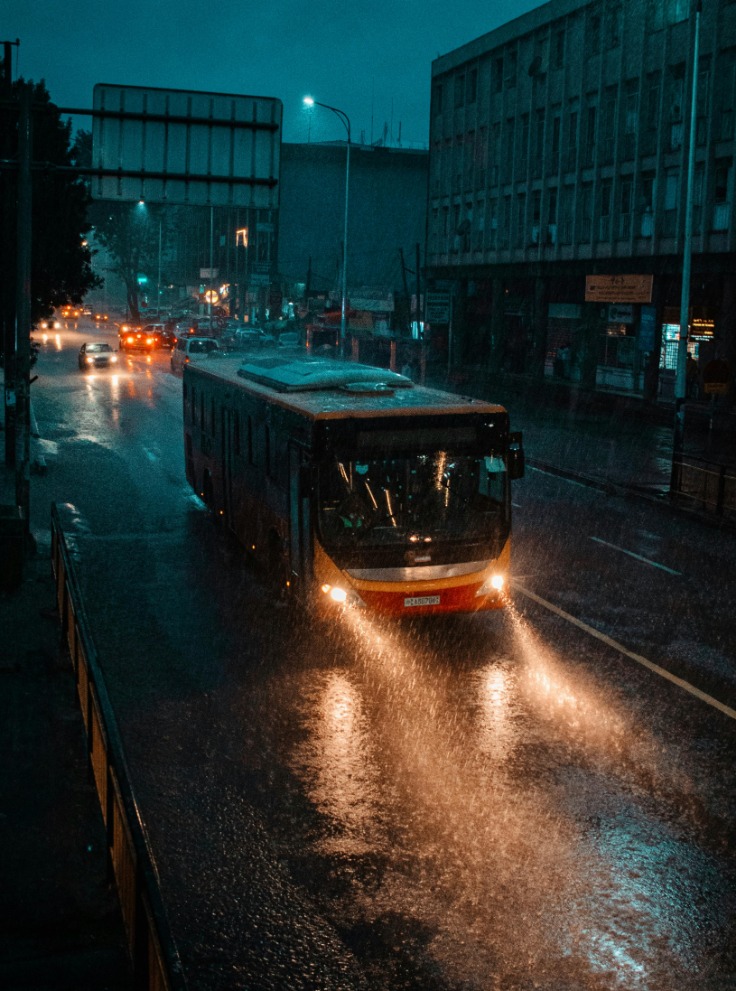
Local service, support, and training are foundational to safe operation. Mercedes‑Benz South Africa operates a broad dealer and service network across major cities, offering maintenance programs, driver training, and safety workshops. This ensures operators can sustain high safety performance, keep up with new features, and comply with evolving regulatory expectations.
By integrating advanced technology, proactive safety features, and rigorous compliance practices, Mercedes‑Benz buses in South Africa aim to reduce risk, improve uptime, and deliver secure, dependable transportation for both drivers and passengers on the country’s diverse roads.
Fleet Operations and Customer Segments
Mercedes-Benz Buses South Africa supports fleet operations with uptime-focused, data-driven solutions that optimize route planning, maintenance, and driver safety. Its customer segments include urban and regional transit authorities, private fleet operators, tourism and charter companies, schools, and shuttle services, each benefiting from tailored bus configurations, telematics, service plans, and financing designed to lower total cost of ownership and boost reliability across South Africa’s transport markets.
Public transport contracts and municipal fleets
Mercedes-Benz South Africa’s bus division focuses on delivering reliable, efficient urban and intercity mobility through a dedicated portfolio for fleet operations and municipal use. The company combines locally produced buses such as low-floor city models, modern intercity coaches and a robust aftersales network to support public transport contracts and municipal fleets across South Africa. With a footprint that includes local assembly, parts distribution and field service, MBSA positions itself as a strategic partner for cities seeking durable, safe and accessible transport solutions.
Fleet operations across MBSA’s customer segments are built around operators, municipal transport authorities, school transport services and private corporate shuttles. Operators value uptime, predictable maintenance costs and driver safety, while municipalities prioritize standardization, interoperability with other modes and compliance with accessibility requirements. MBSA supports these segments with a full lifecycle approach that includes flexible financing, a nationwide service network, telematics for asset management, parts availability and tailored maintenance plans aligned to depot schedules and rostering needs.
Public transport contracts in South Africa typically require robust bids that demonstrate reliable vehicle uptime, efficient fuel use and consistent passenger safety. MBSA positions itself as a partner by offering proven vehicles designed for high daily cycles, comprehensive aftersales support, and integrated fleet management solutions. In tenders, MBSA highlights total cost of ownership, spare parts supply, driver training programs and optional service packages that cover maintenance, warranty extensions and 24/7 assistance to ensure contract compliance and service continuity.
For municipal fleets, Mercedes-Benz South Africa emphasizes lifecycle efficiency and depot-ready solutions. Standardizing on MBSA buses can simplify procurement, training and maintenance across multiple depots, reducing downtime and spares variety. Municipal fleets benefit from low-floor accessibility, modern safety features, efficient diesel technology or alternative fuel options where available, and a localized service network that supports preventive maintenance, rapid diagnostics and on-site servicing as needed.
By aligning product design with public transport policy goals—reliability, accessibility, safety and cost efficiency—Mercedes-Benz South Africa aims to strengthen urban mobility and support city competitiveness. Through close collaboration with operators and municipalities, MBSA seeks to grow sustainable public transport contracts and help modernize municipal fleets with durable buses, connected fleet management and a strong local support ecosystem.
Private operators and corporate shuttle services
Mercedes-Benz Bus South Africa positions itself as a strategic partner for fleet operations, offering a range of bus platforms and services designed for South Africa’s private operators and corporate shuttle programs. The focus is on uptime, safety, and total cost of ownership, backed by a local service network and parts availability.
- Target customer segments in MBSA’s bus portfolio: private operators with urban and intercity routes, corporate shuttle programs for large employers, government or parastatal transport contracts, and special-needs transport providers.
- Private operators: durable chassis, fuel efficiency, driver and passenger comfort, fleet standardization, and maintenance packages that deliver predictable lifecycle costs with MBSA.
- Corporate shuttle services: dedicated fleet configurations, route planning, shift scheduling, on-site servicing, and integrated telematics to optimize employee mobility.
- Fleet management and maintenance: preventive maintenance schedules, MBSA-trained technicians, genuine parts, remote diagnostics, and uptime guarantees.
- Financing and ownership models: outright purchase, long-term leases, service contracts, and flexible terms aligned with corporate budgeting and cash flow.
- Aftersales and support network: regional service centers, mobile service units, parts availability, and rapid response for disruptions.
- Technology and telematics: fleet management platforms, route optimization, driver performance insights, and predictive maintenance powered by MBSA solutions.
- Sustainability and compliance: adherence to South Africa’s emissions standards, adoption of cleaner drivetrains, and end-of-life recycling programs.
- Market differentiation: MBSA’s training, warranties, and local adaptation to regulatory and terrain conditions in South Africa, contributing to lower total cost of ownership for fleet operators.
- Case examples and regional deployments: MBSA-supported corporate shuttle programs and private operator fleets across major SA cities demonstrating reliability and cost efficiency.
Sustainability and Financing
Mercedes-Benz Buses South Africa is shaping a more sustainable public transport landscape by combining advanced, fuel-efficient buses with proactive financing solutions. Through tailored leasing, loan products, and partnerships with financiers, operators can upgrade to cleaner, safer fleets while spreading capital costs and reducing total cost of ownership. This alignment of sustainability goals with accessible financing supports urban mobility, emission reductions, and resilience across South African cities.
Fuel strategy, electrification, and efficiency
Mercedes-Benz South Africa is positioning itself as a leader in sustainable bus transport by aligning profitability with environmental impact through financing solutions, fuel strategies, electrification, and efficiency improvements.
- Sustainability and Financing: MBSA supports operators with financing models that enable fleet renewal to meet emissions standards, optimize lifecycle costs, and access green finance partnerships, while emphasizing total cost of ownership, end-of-life recycling, and supplier sustainability criteria.
- Fuel strategy: A multi-fuel approach prioritizes efficient diesel propulsion with advanced aftertreatment, optimized fuel consumption through drivetrain engineering, and exploration of alternative energy options including electrification and hybrid systems to reduce carbon intensity.
- Electrification: MBSA offers electric and hybrid bus solutions and collaborates with local authorities to pilot and scale fleet electrification, while supporting charging infrastructure, data-driven route planning, and service models that enhance reliability and uptime.
- Efficiency: Focus areas include lightweight construction, aerodynamic design, regenerative braking, advanced driver assistance, telematics for route optimization and maintenance planning, and service concepts that maximize uptime and reduce life-cycle costs.
Financing options and total cost of ownership considerations
Sustainability and financing converge when fleets choose Mercedes-Benz South Africa buses. In a market facing rising fuel costs, emissions targets, and demand for reliable urban mobility, MBSA offers bus solutions that combine environmental performance with flexible financing designed to optimize total cost of ownership for operators across South Africa.
Mercedes-Benz South Africa emphasizes sustainable propulsion, fuel efficiency, and operational intelligence. Modern MBSA buses leverage efficient engines, optimized aerodynamics, and components designed for durability. Green propulsion options such as hybrid drives and electric buses are supported by telematics and diagnostics that help keep emissions and energy use in check, while enabling operators to meet city sustainability goals.
Financing options provided or supported by MBSA and its partners include full service finance leases, operating leases, hire purchase, and fleet-management agreements tailored to bus operations. These structures can bundle vehicle procurement, maintenance, and parts supply into predictable monthly costs, with service level agreements that protect uptime and simplify budgeting for municipalities and private operators alike.
When evaluating total cost of ownership, operators should look beyond the upfront price to incorporate fuel or energy costs, maintenance, tires, and downtime. MBSA-backed financing often includes maintenance plans, service intervals, and access to a nationwide service network, which can reduce unexpected repair costs and improve resale value. Warranty coverage and availability of genuine parts are critical inputs to a reliable TCO model.
Electric and hybrid buses, while typically featuring higher upfront investment, can offer meaningful TCO benefits over the life of the vehicle through lower energy costs, reduced emissions, and simplified maintenance. In South Africa, where energy pricing and emissions considerations are central to fleet strategy, MBSA supports customers with total-care packages, charging infrastructure guidance, and integration with fleet-management tools to quantify TCO and return on investment.
For public, cooperative, or private operators, sustainability-oriented financing should consider life-cycle value, residual values, and tax or grant incentives that might be available for cleaner fleets. MBSA’s financing options aim to align with these incentives, help spread capital expenditure, and provide visibility into fleet performance through data-driven maintenance and telematics.
Choosing Mercedes-Benz South Africa for a bus fleet can help operators balance environmental responsibility with cost discipline. By pairing sustainable vehicle platforms with flexible financing and robust service support, MBSA supports durable, efficient urban transport solutions across South Africa’s diverse markets.
Future Prospects: Local Manufacturing and Localization
Mercedes-Benz Bus South Africa is charting a future built on local manufacturing and localization, aligning global technology with South Africa’s manufacturing base to shorten supply chains, create skilled jobs, and tailor products to local needs. By expanding local assembly, sourcing components regionally, and transferring technology, the company aims to boost resilience, lower total cost of ownership for customers, and accelerate the deployment of sustainable, locally supported bus solutions across the country and the region.
South Africa manufacturing footprint and assembly capabilities
Mercedes-Benz South Africa (MBSA) is strategically positioned to lead local manufacturing and localization efforts for buses in the region, aligning with South Africa’s push to grow domestic value chains while serving growing urban and intercity transport demand. For MBSA, the future of Mercedes bus operations in South Africa hinges on stronger local supplier networks, greater local content, and more integrated assembly capabilities that reduce import dependence and shorten lead times for fleet operators.
Current manufacturing footprint and assembly capabilities in South Africa are centered around MBSA’s facilities and the broader ecosystem that supports bus production. MBSA’s local footprint includes a major assembly and production base for commercial vehicles, with close collaboration with South African suppliers for many components. In practice, buses and coach configurations are assembled in-country from MB chassis and components, with local body builders completing the final bus build by installing bodies, interiors and fitting specialized equipment for municipal and private fleets. This approach enables MBSA to deliver complete buses tailored to SA market requirements while cultivating regional supply chains and after-sales support networks.
Localization strategy underpins MBSA’s approach, focusing on expanding the pool of local suppliers, boosting content from SA manufacturers, and enhancing skills through training and knowledge transfer. The company aims to source more components locally, build resilience in the supply chain, and shorten the cycle from order to delivery. This includes partnerships with local engineering and manufacturing firms, development of after-sales ecosystems, and alignment with South Africa’s automotive export-friendly policies that incentivize local value addition.
Future prospects for Mercedes bus manufacturing in SA include expanding assembly lines for complete buses assembled in-country from locally sourced components, and increasing the localization of electric and hybrid propulsion systems for the growing e-bus segment. As cities modernize and adopt cleaner transport, MBSA could explore localized manufacture of battery modules, charging infrastructure components, and integration capabilities for electric drivetrains, in partnership with local suppliers and research institutions. These moves would strengthen MBSA’s footprint, create skilled jobs, and position South Africa as a regional hub for sustainable bus production and maintenance.
The broader manufacturing footprint also supports regional export opportunities to the SADC region, with a robust service and maintenance network ensuring lifetime value for fleet operations. By leveraging local content and a deeper local engineering base, MBSA can offer competitive total cost of ownership to operators while contributing to skills development and industrial growth. The South African market’s demand for modern, reliable buses aligns with MBSA’s capabilities, and ongoing localization efforts will likely be reinforced by government incentives, infrastructure investments, and procurement programs that favor domestically assembled vehicles.
In summary, the future of Mercedes-Benz buses in South Africa rests on stronger localization, a broader local manufacturing footprint, and a more integrated assembly ecosystem that links chassis supply, body-building, and after-sales support. By deepening local partnerships, expanding e-bus capabilities, and tapping regional demand, MBSA can sustain a competitive advantage while driving economic and transport outcomes across South Africa and neighboring markets.
Localization initiatives and supplier development
Mercedes-Benz South Africa is scaling up local manufacturing for buses and embedding localization across its supplier network to support long‑term growth in the regional market.
At the heart of the strategy is expanding local content in bus production—from body-in-white components and interiors to electrical systems and customised digital solutions—reducing import reliance, shortening lead times, and enabling rapid response to operator needs in South Africa and the broader Southern African Development Community region.
Localization initiatives are being guided by multi‑year roadmaps that map critical components to local suppliers, partner with them on design for manufacturing, and provide access to engineering support, tooling, and quality-management resources to raise capabilities to international standards.
Supplier development programs focus on building a robust, inclusive ecosystem. Mercedes-Benz South Africa collaborates with Tier 1 and Tier 2 suppliers to transfer know‑how, implement IATF 16949 quality standards, invest in automation and Industry 4.0 readiness, and create apprenticeships and learnerships to grow engineering and shop-floor skills.
This approach is expected to generate jobs, advance Black Economic Empowerment objectives, and stimulate SMEs through predictable demand, long‑term contracts, and access to global best practices in lean manufacturing and sustainability.
Regional and export potential is enhanced as locally produced buses meet international specifications and regulatory requirements, opening opportunities for fleet operators across Southern Africa and supporting the continent’s transport infrastructure goals while maintaining competitive total cost of ownership.
Challenges remain, including cost-down pressures, the need for stable power supply, skills retention, and ongoing investment in local tooling and modernisation. MBSA continues to work with government agencies, training institutions, and local suppliers to mitigate risk and sustain momentum for localization.
Overall, the future for Mercedes-Benz buses in South Africa rests on a resilient, localized manufacturing model that strengthens the value chain, creates jobs, and delivers reliable, high‑quality vehicles for customers in SA and the region.